

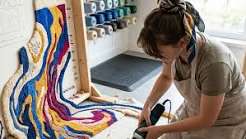
Tufting is a textile technique that involves inserting yarn into a stretched fabric backing to create rugs, wall hangings, and decorative objects. Once associated primarily with textile manufacturing, tufting has become an accessible craft for adults interested in making objects by hand. The activity combines drawing, color selection, equipment handling, and finishing techniques. Unlike many traditional crafts, tufting allows beginners to produce recognizable designs without spending years learning complex textile methods.
The popularity of rug making also reflects changing entertainment preferences. Some people prefer activities based on immediate excitement, while others seek experiences involving creativity and practical results. Readers exploring digital entertainment can read more about a chance-based casino game, although gambling involves financial risks and does not provide the same skill development as crafting. Tufting offers an alternative in which participants control the design, materials, and production process while developing techniques through practice.
How Tufting Works
Tufting involves pushing yarn through a fabric backing secured tightly to a frame. A specialized tufting gun inserts loops or cut strands of yarn, gradually forming a textile surface.
The design is usually drawn onto the reverse side of the backing. Participants follow its outlines before filling larger sections with yarn.
Two common techniques are cut-pile and loop-pile tufting. Cut-pile equipment cuts yarn loops to create individual strands, while loop-pile methods leave loops intact.
These techniques produce different textures and affect how the rug feels and looks.
After tufting, the reverse side is secured with adhesive, backing material is attached, and the surface is trimmed to achieve the intended appearance.
Why Tufting Attracts Adults
One reason tufting appeals to adults is the relationship between effort and visible progress.
Unlike crafts involving numerous small stitches, tufting allows participants to cover substantial areas relatively quickly.
This creates a sense of achievement during the production process.
Another factor is creative freedom. Hobbyists can reproduce geometric patterns, illustrations, abstract compositions, or designs developed specifically for an interior.
The activity also combines physical movement with concentration, providing a change from computer-based work.
However, tufting requires patience and equipment control. Producing a durable rug involves more than completing the visible yarn pattern.
The Influence of Social Media and Craft Workshops
Short videos have contributed to public interest in tufting by showing the transformation of yarn into finished rugs.
The process is visually recognizable, making it suitable for demonstrations and tutorials.
Workshops have also reduced barriers to participation. Beginners can use equipment, receive instruction, and complete introductory projects without purchasing an entire setup.
This format allows participants to evaluate whether they enjoy the activity before investing in tools.
However, online demonstrations may underestimate the time required for trimming, backing, and correcting mistakes.
Understanding every production stage helps establish realistic expectations.
Essential Equipment for Rug Tufting
A basic tufting setup includes a frame, backing fabric, yarn, tufting gun, and finishing supplies.
The frame must maintain fabric tension because loose backing can cause uneven stitches or equipment problems.
Yarn selection influences texture, durability, and maintenance requirements. Wool and synthetic fibers have different properties and costs.
Finishing equipment may include scissors, clippers, adhesive, and secondary backing material.
Workspace planning is important because powered tufting produces noise and textile fibers.
Protective equipment, ventilation, and careful handling of moving components help reduce risks during production.
How Much Does Tufting Cost?
The cost of tufting depends on equipment quality, project dimensions, materials, and production frequency.
A powered tufting gun generally represents one of the largest initial purchases. Frames, backing fabric, adhesives, and finishing tools create additional expenses.
Yarn consumption increases with rug size and pile density.
Beginners should also account for practice materials because early projects may contain mistakes requiring correction.
Attending a workshop can be more economical than purchasing equipment for a single project.
For people planning regular production, owning tools may become practical over time.
Choosing Designs for a First Rug
Beginners benefit from selecting designs with recognizable shapes and limited color changes.
Large geometric patterns are generally easier to complete than illustrations containing narrow lines or numerous small details.
The intended rug dimensions should also match the available frame and workspace.
Before tufting, participants must consider how the design will appear when viewed from the finished side.
This is particularly important for letters or asymmetric illustrations because the backing is often worked from the reverse.
Starting with a manageable design allows beginners to practice yarn placement and equipment control.
Common Problems Beginners Encounter
Uneven pile height, fabric tension problems, and inconsistent yarn placement are common during early projects.
Moving the tufting gun at an unsuitable speed can affect stitch formation.
Insufficient spacing between rows may create excessive density, while large gaps can leave visible backing.
Finishing mistakes can also affect durability. Poor adhesive coverage or unsuitable backing materials may cause yarn loss or edge damage.
Practicing on sample fabric helps identify equipment settings before beginning a complete rug.
Following suitable safety procedures is essential because tufting guns contain moving needles and cutting mechanisms.
Can Tufting Become a Source of Income?
Some hobbyists eventually sell handmade rugs, wall decorations, or customized textile products.
However, profitability depends on production costs, labor time, equipment maintenance, and customer demand.
Pricing should account for design preparation, yarn consumption, tufting, finishing, packaging, and potential defects.
Large projects may require substantial time even when the visible tufting stage progresses quickly.
Selling also introduces responsibilities involving quality control, communication, and delivery.
For beginners, developing consistent production techniques is more important than immediately turning the hobby into a business.
Tufting Compared With Traditional Rug Making
Tufting differs from weaving and hand-knotting in both equipment and construction methods.
Weaving interlaces threads to create fabric, while hand-knotting secures individual knots around foundation threads.
Tufting inserts yarn into an existing backing, allowing faster coverage of large areas.
However, speed does not automatically guarantee durability.
The quality of backing materials, yarn attachment, and finishing influences how well a tufted rug withstands use.
Understanding these differences helps hobbyists select techniques according to their goals.
Why Rug Tufting Continues to Appeal to Creative Adults
Tufting combines design, manual work, and textile production in an activity that produces functional or decorative objects.
Its popularity reflects interest in personalized interiors, craft workshops, and hobbies offering visible progress.
Beginners can start with small projects before exploring larger rugs and complex patterns.
Although equipment costs and finishing requirements deserve consideration, the activity provides opportunities to develop practical skills and creative judgment.
For adults seeking an alternative to screen-based leisure, tufting offers a way to transform ideas into physical objects while learning a specialized craft.
